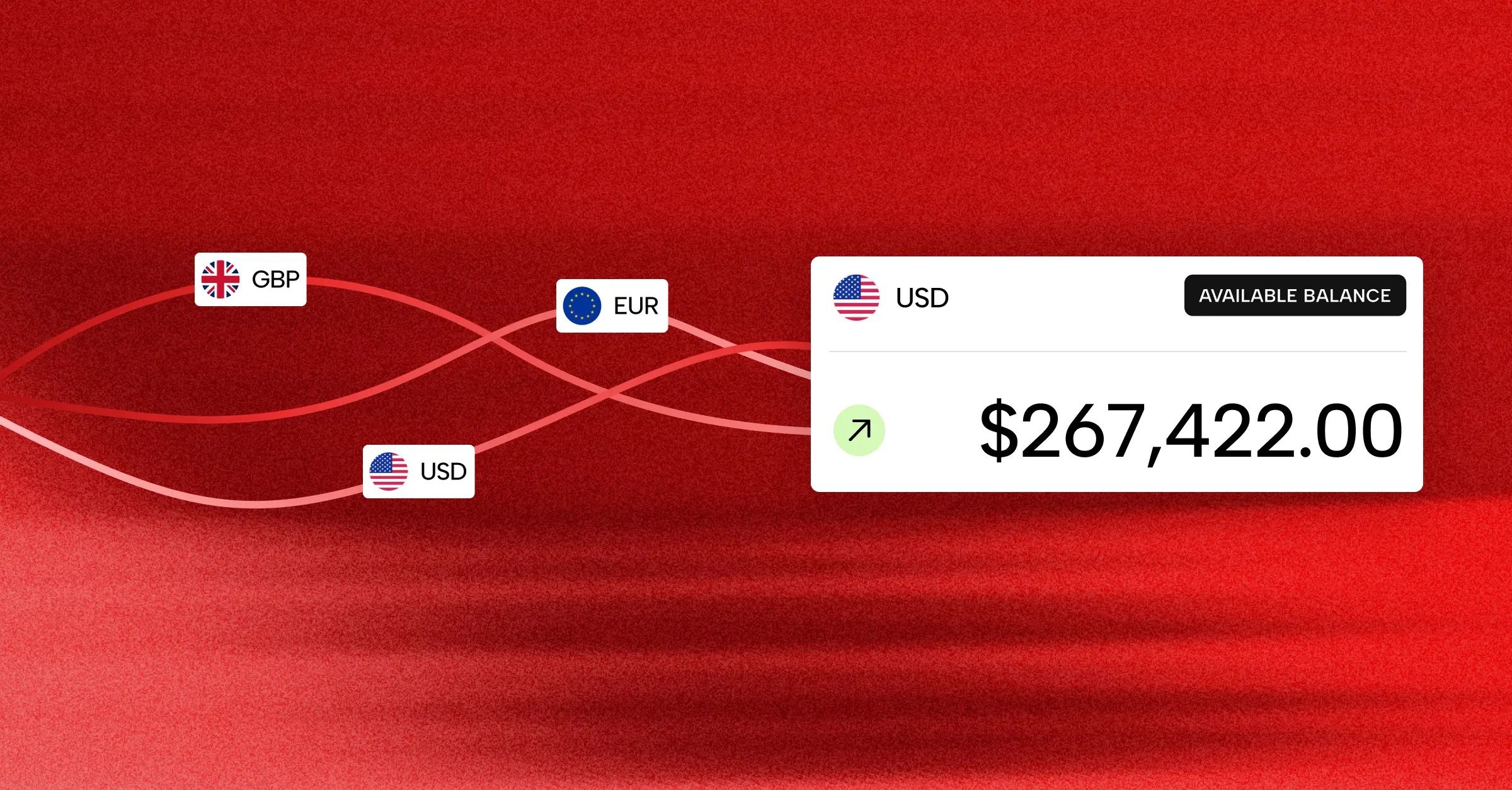
Every finance team is sitting on cash that isn't doing much: payroll float waiting to go out, a supplier reserve nobody's touched in months, surplus left over from a strong quarter, runway sitting between funding rounds. None of it is a problem exactly, it's just idle. And idle cash has a cost, the gap between what it's earning and what it could be.
That gap is harder to catch than it used to be. Operating across more currencies means more places for cash to sit unnoticed. And CEOs, boards, investors, and other key stakeholders want to see the decisions behind the cash balance rather than just the balance itself. Here's where to start closing the gap.
Start with visibility, not returns
Most finance teams have the same basic problem: they don't actually know how much cash is idle versus committed. If you're managing balances across entities, currencies or banking relationships, this is the foundation everything else sits on.
Payroll is an area where idle cash tends to hide in plain sight. Running payroll in three currencies can mean converting into each one earlier than necessary, leaving a local balance sitting dormant until the next cycle, simply because moving it around feels like more trouble than it's worth. Multiply that across every currency and every recurring payment, and idle cash builds without anyone deciding to let it happen.
Making all of your cash visible can start a few different ways: centralizing balance reporting even when the underlying accounts stay separate, sorting balances by purpose (operational float, seasonal buffer, runway, strategic reserve) or building a rolling 13-week cash flow forecast if one doesn't exist yet. It's the fastest way to tell "surplus" cash apart from cash needed for a supplier run in six weeks. This level of visibility is what Sokin's multi-currency accounts are designed to provide: up to 26 currencies in one dashboard, synced into Xero, Sage and NetSuite.
Put idle balances to work
Once you've got visibility into what's idle, the next question is what to do with it. Money you need for next week's supplier payment and money that's sat untouched for four months have different jobs. Operational float needs to stay liquid, but it doesn't need to sit at zero return while it waits. Surplus you're confident you won't need for weeks or months can be committed to a fixed term instead, for a better rate.
Increasingly finance teams are solving for this with earning features built into the platform they already use for payments, rather than a separate savings account or a full treasury build-out. Sokin's Balance Boost is one example: it lets businesses earn returns at competitive rates on eligible USD, GBP and EUR balances without moving funds anywhere new.
It's built for businesses mid-market and up already managing multi-currency operations that don't have (or don't want to build) a dedicated treasury function. It's not a replacement for a treasury strategy. It's a way to close the gap between cash you're holding and cash that's actually earning.
Tailor your cash strategy to your business
How hands-on you want to be with splitting off idle cash is a choice, not a fixed setting. Balance Boost comes in two modes, easy access and fixed term. How you use them is up to you: easy access covers cash you might still need soon, fixed term locks in a rate for cash you're confident you won't touch, and both can run side by side. For example, a treasury manager might ring-fence three months of operating expenses in easy access while fixing a six-month surplus in fixed term, in the same account, without opening anything new.
Sweeping rules give teams the ability to automate the split, too. Sokin is building this into Balance Boost so the split maintains itself: set a threshold once, on any account, and surplus above it moves automatically into easy access or fixed term the moment it clears. Set the threshold at $50,000 on an operating account, for example, and everything above that sweeps into a fixed term automatically, while everything below it stays put and ready to spend. Rules can be viewed, edited or paused any time, so automating the split doesn't mean losing visibility into what's moving and why, keeping you firmly in control.
The bottom line
None of this is a one-time fix. Idle balances creep back as a business grows, new currencies enter the mix, and payment cycles shift, often faster than anyone planned for. The businesses that stay ahead of it are the ones that build a review into a cadence that already exists, quarter-close or board reporting is an easy place to hang it, and keep asking what's sitting idle and whether it's earning what it should.
That's what making every dollar work harder actually comes down to: better visibility, smarter cash segmentation, and the right earnings tools for the balances a business is confident it won't need. The best treasury approaches aren't the most complex ones. They're the ones that get revisited often enough that idle cash never becomes a habit.
Sokin provides the financial infrastructure that lets global businesses send, receive, convert, control and earn on their money, all from one platform instead of a patchwork of banks and providers. That includes stablecoin rails alongside fiat as part of Sokin's Hybrid Finance capabilities, and our agentic finance layer, which turns that same data into the insight finance leaders need to make faster, better-informed decisions.
This article is for general information only and doesn't constitute financial, tax or legal advice. Every business's cash position is different, so treat the ideas here as a starting point for your own review, not a recommendation. Balance Boost is subject to eligibility and availability by region and account type, and rates are indicative until confirmed at the point of activation. Speak with your own advisors before making treasury decisions.