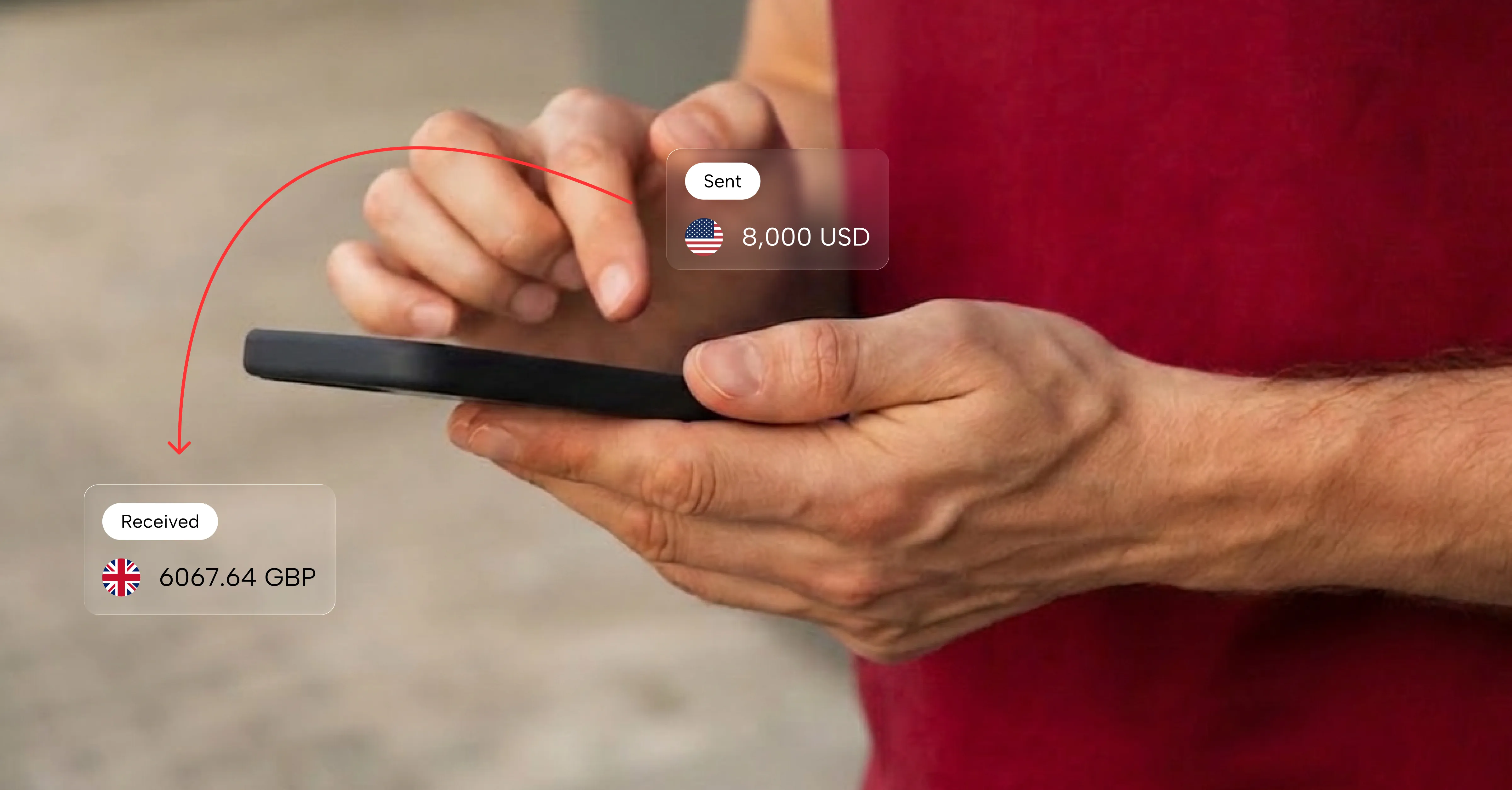
Cross-border payments are no longer occasional; they’re a daily operational and strategic priority for most finance teams.
Global payment volumes continue to rise, with cross-border payments projected to reach $290 trillion globally by 2030.
As volumes grow, so does complexity. What used to be a simple bank transfer now impacts margin, FX exposure, and cash flow visibility across the business.
For finance leaders, managing cross-border payments is no longer just about moving money. It’s about reducing inefficiencies, improving predictability, and supporting global growth.
This guide covers some key points, including:
- What are cross-border payments?
- How cross-border payments move today
- The real cost of traditional cross-border payment solutions
- Key features to look for in cross-border payment solutions
- Practical tips on managing FX exposure
- How to upgrade your cross-border payment strategy with Sokin
What are cross-border payments?
Cross-border payments are transactions where a business sends or receives funds across different countries, often involving multiple currencies. In practice, cross-border payments power everyday business activities such as paying international suppliers, settling invoices, running global payroll, or collecting revenue from overseas customers.
Unlike domestic transfers, cross-border payments typically involve currency conversion, multiple payment networks, and sometimes intermediary banks. This is where complexity and cost can build.
How cross-border payments move today
Traditionally, finance teams have relied on correspondent banking networks like SWIFT, alongside domestic clearing systems and card networks, to move money across borders.
These routes are widely used, but cross-border payments often pass through multiple intermediaries before reaching the recipient. Each step can add fees, delay settlement, or reduce visibility into payment status. For businesses managing recurring supplier, partner, or payroll payments, this creates operational drag. Finance teams may need to manage multiple bank relationships, reconcile payments across systems, and track FX exposure manually.
The result is often a fragmented view of global cash flow, less predictable costs, and more complexity when forecasting liquidity across markets.
For finance teams, this fragmentation makes it harder to control costs, manage FX exposure, and scale payment operations efficiently.
The real cost of traditional cross-border payment solutions
According to a JP Morgan report, cross-border B2B payments cost businesses an estimated $120 billion annually driven by slow speed of settlements, FX markup fees, and more. Here are the common cost drivers that finance teams should look out for:
- Layered fees and FX markups: International business payments made through traditional systems come with sending fees, intermediary processing charges, and receiving fees. Add to that, the unpredictable FX markups over mid-market rates. These costs tend to compound, especially for recurring international transfers. The result is significantly lower cost efficiency.
- FX exposure between invoice and settlement: Traditional cross-border payment solutions often take anywhere between 1-5 days to settle, which can increase FX exposure between invoice and settlement dates. Finance teams are required to manage this FX exposure by holding balances in multiple currencies and forecasting cash needs.
- Manual reconciliation and fragmented workflows: Another hurdle in managing cross-border payments is the operational intricacies. Manual reconciliation of payments across entities adds room for error when carrying out bulk payments. Businesses also face the challenge of fragmented tracking and visibility from the use of multiple bank portals. This complicates cash flow forecasting and liquidity management.
- Compliance checks and payment controls: Managing international business payments means navigating multiple regulatory frameworks in various jurisdictions. Conducting KYC/AML checks, managing approval workflows and access controls and audit trails, and checking sanction lists using legacy solutions can result in a slow and inefficient process. Additional checks can delay payments, especially when beneficiary details, approvals, or supporting information are incomplete.
These challenges are why many finance teams are reassessing their payment infrastructure.
Key features to look for in cross-border payment solutions
For finance teams managing recurring cross-border payments, a modern global payments platform should reduce manual work, improve cost visibility, and support faster payment execution across key corridors.
Here’s what to look for when considering upgrading your payment infrastructure:
- Unified payment infrastructure: A modern global payments platform should replace fragmented banking relationships with a single system that manages payments, FX, and balances in one place.
- Multi-currency business accounts: Multi-currency accounts allow finance teams to hold, receive, and pay in supported currencies, reducing unnecessary FX conversions and giving greater control over FX timing and exposure. You can also wait to convert funds until exchange rates are favorable, lower exchange rate risk, and reduce unnecessary FX conversions when receiving and paying in the same currency.
- Transparent pricing: As a finance team, having clear visibility of costs on recurring and high-value transfers is essential to manage cash flow and costs efficiently. Payment solutions that offer competitive FX rates and transparent fees help finance teams better control and forecast cross-border payment costs.
- Near-real-time transfers: Some platforms support near-real-time transfers between accounts on the same network. With Sokin Direct, businesses can move funds instantly between Sokin accounts, while other payment routes depend on corridor and rail availability.
- Bulk payments: If your business deals with recurring global transfers, consider a payments solution that can help you make batch payments. With this feature, you can save payment templates and upload thousands of beneficiary details (in a single upload). So, your team can save time and lower the risk of errors. You can also speed up and automate approvals and reconciliation for these batches for every bill cycle.
- Integrations and workflow controls: An ideal global payments solution integrates with existing accounting or ERP systems via APIs, connecting payment data and reducing manual reconciliation. This not only lowers the burden of error-prone, manual tasks but also improves visibility over payment activity. Role-based access and approval workflows help maintain control as payment volumes grow.
Practical tips on managing FX exposure for finance leaders
- Efficiently using multi-currency accounts: Holding balances in frequently used foreign currencies via multi-currency accounts can help manage currency exposure more effectively.
- Planning conversions around business needs: Where possible, avoid forced conversions by aligning FX activity with payment schedules, cash flow needs, and internal approval timelines.
- Using same-currency arrangements: Where commercially practical, sending and receiving payments in the same currency by having arrangements with vendors and counterparties can help reduce FX slippage.
A global payments solution with multi-currency accounts, access to local and international payment rails, and workflow automation can help finance teams manage FX exposure with more control and visibility.
Here's how traditional payment solutions and unified global payment platforms compare when managing FX in cross-border payments.
Where Sokin fits into your cross-border payments strategy
For finance teams managing cross-border payments at scale, Sokin replaces fragmented banking setups with a unified platform to manage cross-border payments, FX, and treasury workflows in one place.
Sokin helps finance teams streamline international payments across 170+ countries in 70+ currencies1 using local and international payment rails, SWIFT, and instant transfers between Sokin accounts via Sokin Direct. With access to fast payment routes and multi-currency accounts for up to 26+ currencies, finance teams can improve payment speed, control FX exposure, and reduce operational complexity.
It also supports batch payments, reconciliation workflows, approval controls, and embedded payment solutions for platforms and marketplaces. The Sokin Direct feature also enables instant transfers between Sokin accounts.
For cost control, Sokin offers transparent pricing, competitive FX rates, and clearer visibility over payment activity and cash positions. The result is less manual work, more predictable payment costs, and stronger control over global payment operations.
Example: How a mid-sized ecommerce business could streamline global payments
Consider a mid-sized ecommerce business operating across multiple countries and paying suppliers, partners, and service providers in different currencies. Its finance team relies on multiple bank portals and payment routes, creating a fragmented view of cash flow, manual reconciliation across regions, and less predictable FX costs. Over time, these inefficiencies make it harder to forecast liquidity, control payment costs, and manage FX exposure.
By moving to a unified global payments platform, the business can centralise payment workflows, reduce manual work, improve visibility over cash positions, and manage international payments with greater control.
Final thoughts: Cross-border payments as a strategic lever
Cross-border payments are no longer just an operational task. For finance leaders, they influence cost control, FX exposure, cash flow visibility, and global growth. By replacing fragmented payment infrastructure with a unified platform, finance teams can reduce inefficiencies, improve cost predictability, and scale global payment operations with control.
Explore how Sokin can help you simplify cross-border payments seamlessly.