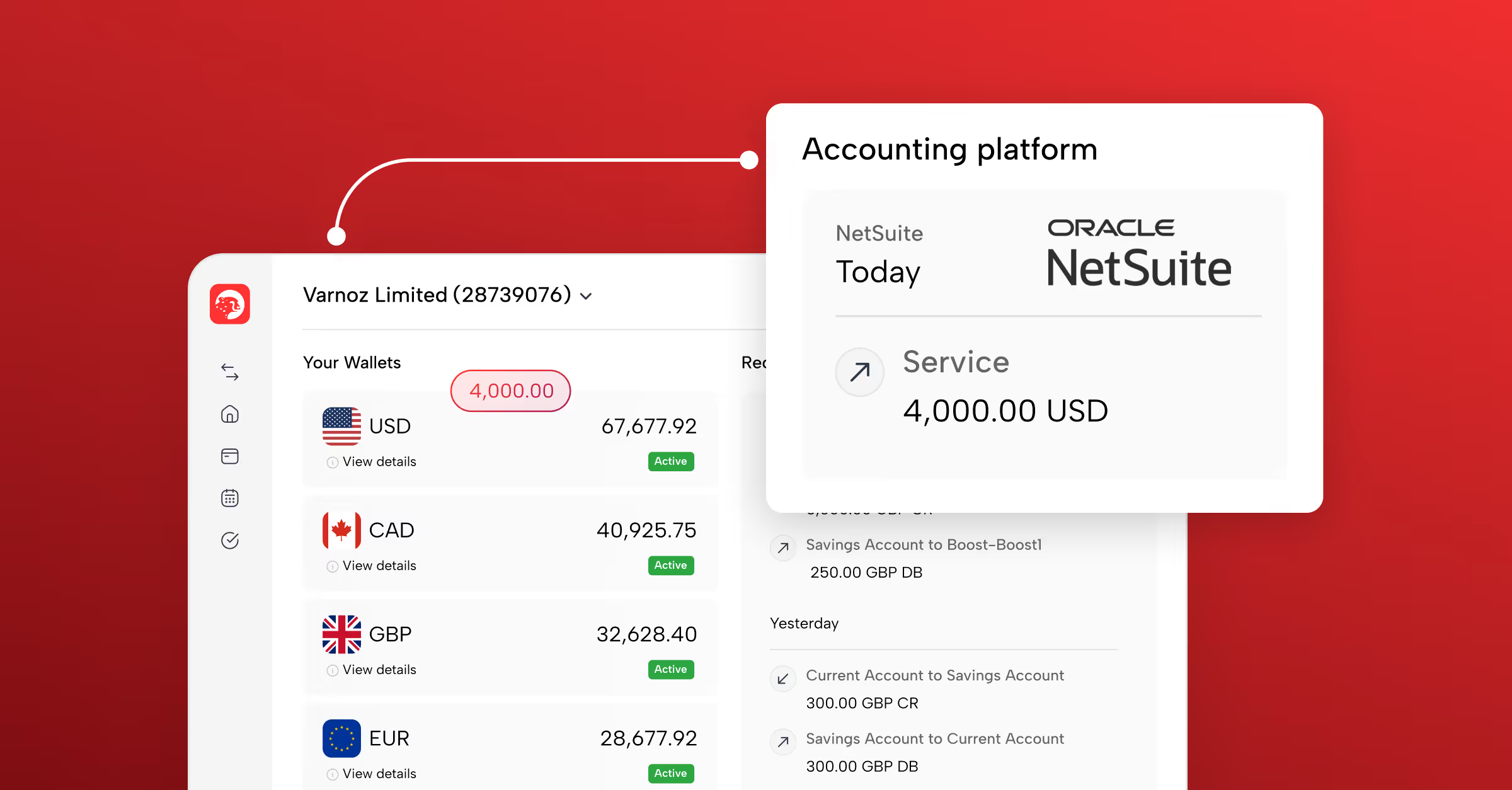
Managing business finances should not mean multiple spreadsheets, missing transactions, or last-minute month-end scrambles. Bank feeds keep your accounting system up to date automatically, so you can review and reconcile faster.
If you use accounting platforms like Xero, QuickBooks, Sage, or NetSuite, bank feeds are one of the simplest ways to keep your financial data accurate, up to date and connected.
What is a bank feed?
A bank feed is a secure, automated data connection between your Sokin wallet and your accounting system, designed to keep transactions in sync.
Once connected, transaction data is shared from your Sokin account to your accounting software with a daily sync. This includes payments in, payments out, fees and balances, without manual uploads or CSV files.
In short: transactions appear automatically, so they’re ready to review and reconcile.
How bank feeds work
When you connect a wallet to your accounting software:
- A secure connection is established using encrypted APIs
- Transaction data is pulled directly from your Sokin wallet
- Entries appear in your accounting platform automatically
- You review, categorise and reconcile rather than manually enter data
This removes friction from day-to-day finance operations and ensures your books reflect what is happening in your business.
Why bank feeds are so valuable for businesses
1. Save time and reduce manual work
Manual data entry is slow and error-prone. Bank feeds eliminate the need to upload statements or type in transactions line by line.
With automated feeds:
- Transactions sync automatically
- Reconciliation becomes quicker and more consistent
- Finance teams spend less time on admin and more time on strategy and analysis
For growing businesses, this timesaving adds up fast, especially as transaction volume increases.
2. Improve accuracy and reduce errors
Human error is a common cause of accounting discrepancies. Bank feeds reduce manual handling, which helps cut down:
- Duplicate entries
- Missing transactions
- Incorrect amounts or dates
Cleaner data means more reliable financial reporting and fewer headaches at month- end.
3. Get near real-time financial visibility
When transactions flow in daily, your books stay current.
This gives you:
- A clearer view of cash flow
- Faster insight into income and expenses
- The ability to make decisions based on up-to-date data
Instead of waiting weeks for reports, you can see how your business is performing with much more up-to-date numbers.
4. Simplify reconciliation across multiple currencies
For businesses operating globally, bank feeds are especially powerful.
When your wallets or accounts are connected directly to accounting platforms like NetSuite, Xero, QuickBooks, or Sage, you can:
- Track multi-currency transactions automatically
- Match payments to invoices more easily
- Maintain consistent records across regions and entities
This is particularly valuable when managing international payments, FX, or multiple subsidiaries.
5. Make life easier for accountants and finance teams
Bank feeds help create a single source of truth between operations and accounting.
Accountants benefit from:
- Faster month-end close
- Fewer follow-up questions
- Cleaner audit trails
Businesses benefit from smoother collaboration with their finance partners.
The bottom line
A bank feed is not just a technical feature. It is a foundation for better financial control.
By connecting your wallets directly to accounting platforms like Xero, QuickBooks, Sage, or NetSuite, bank feeds help you:
- Save time
- Reduce errors
- Improve visibility
- Scale your finance operations with confidence
In a world where businesses move money globally and move fast, your accounting should be able to keep up.
Want fewer spreadsheets and faster reconciliation? Explore Sokin’s accounting integrations today!