International bookings are growing. Payment complexity is growing faster.
For many hotel finance teams, margin pressure does not come from demand. It comes from the way money moves behind the scenes. Cross-border payments, FX conversions, OTA settlements and manual reconciliation quietly chip away at profitability long before results reach the P&L.
Understanding and addressing hotel payment inefficiencies is now essential for finance leaders who want clearer visibility, stronger control and margins that scale with international growth.
Why hotel finance operations need a new lens
Hotel finance teams sit at the centre of a uniquely complex payment ecosystem. Revenue flows from guests, OTAs, agents and corporate partners. Costs flow out to suppliers, service providers, property teams and overseas partners.
Much of this activity crosses borders and currencies multiple times before landing on the balance sheet.
Yet many hospitality finance systems were not designed for this level of international complexity. As a result, hotel payment inefficiencies have become one of the most persistent and least visible drains on margin in the industry.
From manual payment processes to fragmented provider data, finance teams are pushed into reactive reconciliation rather than proactive margin protection. The core challenge is not transaction volume. It is infrastructure.
The hidden cost of legacy payments in hospitality
Across the sector, cross-border payments for hotels quietly erode profitability. Legacy payment rails, forced currency conversion, and inconsistent fee structures introduce friction at every stage of the payment lifecycle.
Common sources of hotel revenue leakage include:
- Hidden FX fees in hotel payments that reduce net revenue before it is reported
- Settlement delays that create timing gaps between cash movement and accounting
- OTA payments arriving in unsupported currencies, triggering avoidable conversions
- Multiple banking relationships that fragment visibility and increase hotel payment costs
Individually, these issues appear minor. Over time, they accumulate significant losses that only surface during audits, reconciliations, or forecasting reviews
Ending hidden FX leakage to protect your margins
One of the most significant drivers of payment inefficiencies in the hotel industry is forced currency conversions.
Guests may pay in one currency, while OTAs settle in another. When hotel accounts only support a limited set of currencies, automatic FX conversions become unavoidable. Each conversion introduces spreads and fees that show up as unexplained variance rather than controlled costs.
For finance teams, this results in:
- Reduced predictability in net revenue
- Difficulty explaining margin variance across regions
- Increased reconciliation effort tied to FX differences
Modern hospitality finance systems aim to reduce unnecessary FX by supporting like-for-like settlement in available currencies. This enables businesses to receive and hold funds locally where possible and use appropriate local or international payment rails, such as ACH, SEPA or FPS, rather than defaulting to international routes.
This approach does not remove FX from the equation. It restores control over when and how conversions occur.
Unifying the back office through financial visibility and control
Hotel payment reconciliation challenges remain one of the biggest operational burdens for finance teams. Data arrives from OTAs, agents, direct bookings, cards and local payment methods at different times and in different formats.
This fragmentation leads to:
- Slower close cycles
- Heavy reliance on manual matching
- Limited confidence in real-time cash positions
By unifying inbound and outbound payment flows, finance teams gain:
- Near real-time visibility by currency, channel and region
- Faster reconciliation across OTA payments and direct bookings
- Reduced dependence on spreadsheets and manual workarounds
The result is not just efficiency, but stronger financial oversight and improved forecasting accuracy.
Payment inefficiencies increase financial risk as well as cost
In hospitality, chargebacks remain a challenge, particularly when outdated card capture processes or disconnected systems are still in use. Fragmented infrastructure makes it harder to trace transactions, respond to disputes, and demonstrate compliance.
Centralised payment infrastructure supports finance teams by:
- Maintaining consistent audit trails across international hotel payments
- Reducing manual errors and duplicated entries
- Strengthening internal controls without slowing day-to-day operations
When every transaction follows a consistent and traceable path, risk management becomes part of routine operations rather than a reactive exercise.
Protecting margins as payment volumes and complexity grow
As hotel groups expand into new markets, payment complexity increases faster than revenue unless infrastructure evolves alongside it. The cost of standing still compounds over time.
Eliminating hotel payment inefficiencies enables finance teams to:
- Protect margins from hidden FX leakage
- Reduce reconciliation effort as transaction volumes grow
- Scale internationally without adding disproportionate operational overhead
For hospitality finance leaders, the goal extends beyond cost reduction. It is about building payment foundations that deliver clarity, control and confidence as the business grows
How Sokin supports modern hospitality finance teams
Sokin helps accommodation groups simplify global payments by bringing collections, payouts and currency management into a single platform.
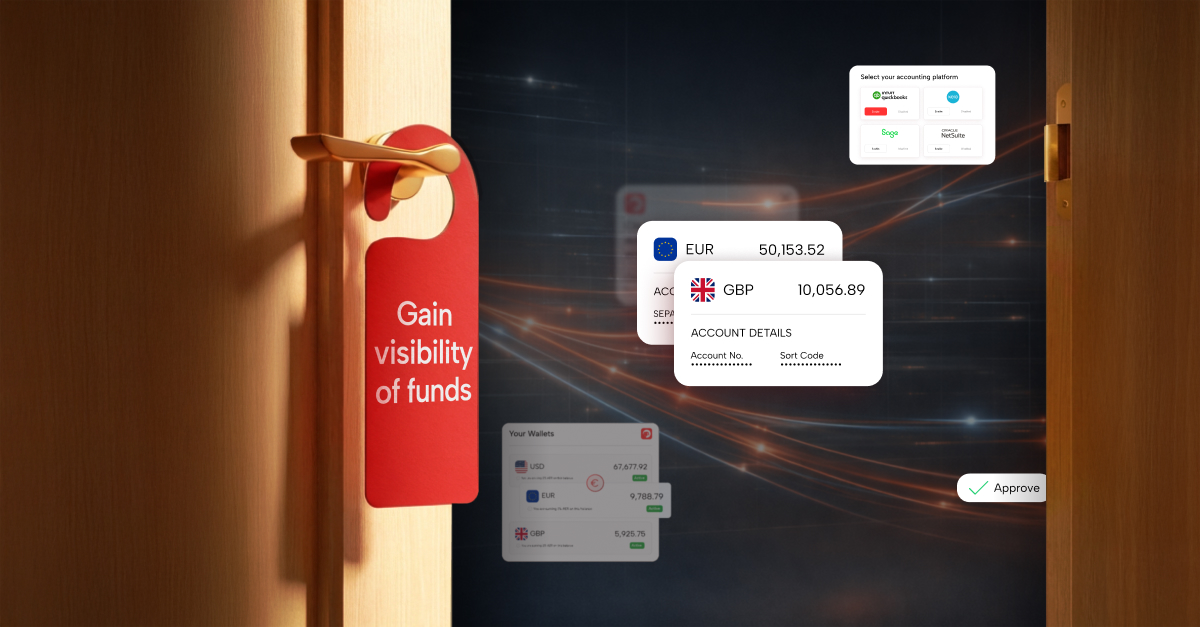
With multi-currency wallets, like-for-like settlement and bulk payment capabilities, finance teams gain greater control over FX exposure, as well as clearer visibility across OTA payments, supplier flows and less reliance on manual reconciliation. Integrated payment data supports faster close cycles and more predictable reporting, without forcing teams to change how they operate day to day.
For hotels managing high volumes of international payments, Sokin provides the infrastructure needed to protect margins and scale with confidence.